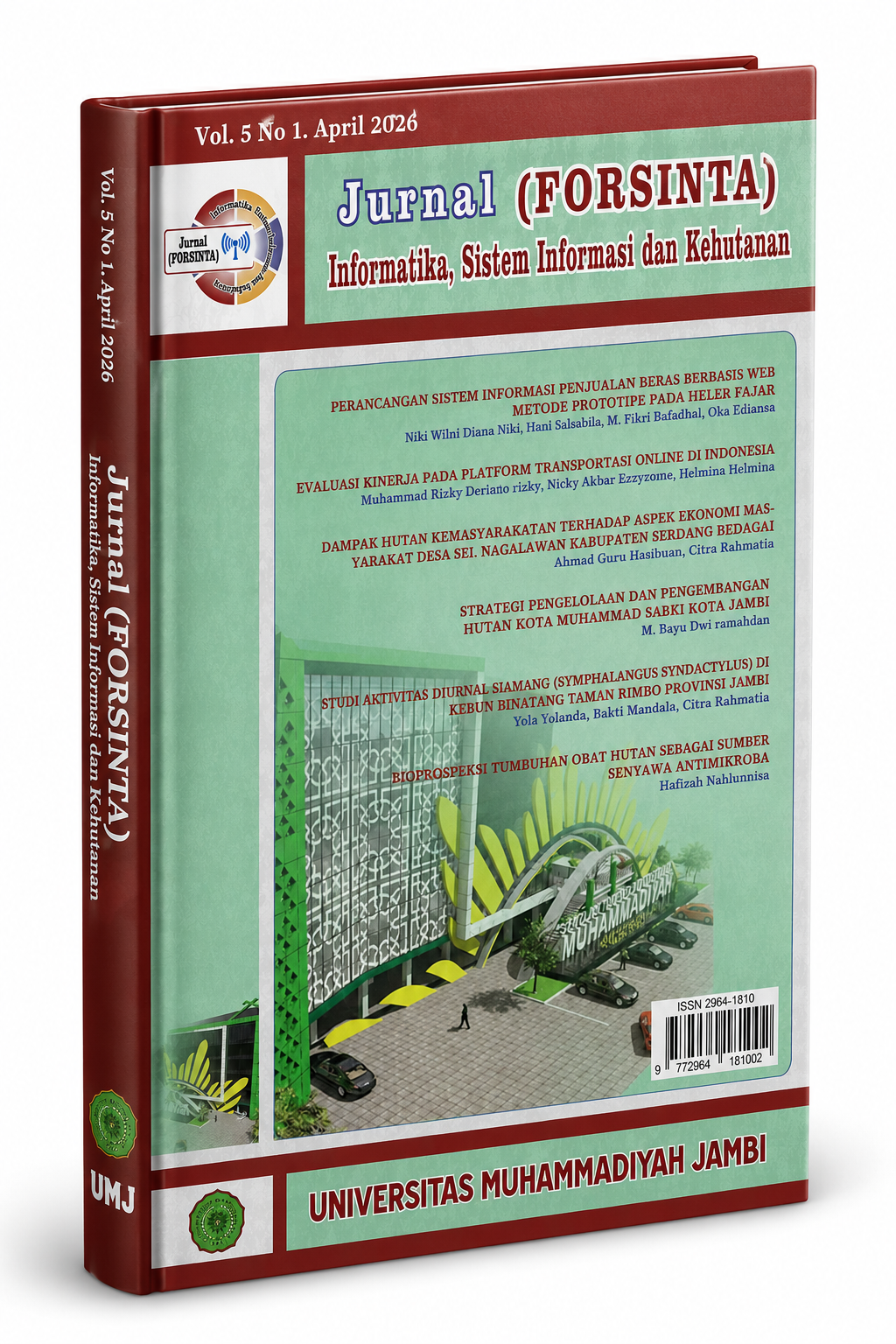
STRATEGI PENGELOLAAN DAN PENGEMBANGAN HUTAN KOTA MUHAMMAD SABKI KOTA JAMBI
Article Sidebar
Main Article Content
Abstract
Grellen Open Space plays a crucial role in designing a sustainable city. This study aims to analyzel and formulatel strategiels for the management and development of the Muhammad Sabki City Forest in Jambi City. The Muhammad Sabki City Forest, which covers an area of approximately 10.56 hectares, not only plays a role in providing comfortable public space but also in maintaining ecosystem balance and providing social and educational benefits to the community. This research was conducted in the Muhammad Sabki City Forest, Kelnali Asam Bawah, Jambi City. Data collection techniques included interviews, observation, and documentation. The study used a purposive sampling method for collecting respondents, with data analyzed using a SWOT analysis. The results showed that the analysis of internal and external environmental factors, including the strategy for managing and developing the Muhammad Sabki City Forest in Jambi City, demonstrated that the internal factor score was 2.59, while the external factor score was 2.62. The SWOT analysis revealed a quadrant point in the diagram positioned in quadrant I, namely SO (strengths and opportunities) or Aggressively Strategically (Profitably). The focus of this strategy is to utilize internal strengths to maximize existing opportunities, thus supporting an aggressive growth policy.
Downloads
Article Details
References
[1] Amir, L., & Raharja, I. F. (2018). Aksi Pemerintah Daerah dalam Pengelolaan Perkotaan di Kota Jambi untuk Meningkatkan Sumber Pendapatan Asli Daerah di Kota Jambi. Jurnal Ilmu Sosial Humaniora, 2(1), 43-50.
[2] Angulri, R., & Narayanan, P. (2017). Peran Perencanaan Tata Ruang Kota dalam Perencanaan Kota: Sebuah Tinjauan Menuju Kota Cerdas. Kehutanan Kota & Perencanaan Kota, 25, 58-65.
[3] Armelllia, A. T. (2013). Rancang Bangun Aplikasi Pengenalan Negara-Negara Asia Berbasis Android Design Introduction Asian Countries Based On Android Applications (Doctoral Dissertation, Universitas Muhammadiyah Purwokerto).
[4] Caellsarina, H. M., & Rahmani, D. R. (2019). Penyediaan Ruang Terbuka Hijau dengan Pendekatan Kota Hijau pada Perkotaan Martapura. Jurnal Planoellarth, 4(1), 11. https://doi.org/10.31764/jpell.v4i1.712
[5] Chelll, A., & Kaulshik, G. (2017). Renellwablell Energy Technologies for Sustainablell Development of Energy Efficiellnt Building. Alellxandria ELLnginellellring Joulrnal.
[6] Cvelljić, R., ELLlellr, K., Pintar, M., Želllellznikar, Š., Haasell, D., Kabisch, N., & Strohbach, M. (2017). A Typology of Urban Green Spaces, Ecosystem Services Provisioning Services and Dellmands. 10.
[7] David, Frelld, R. 2011. Strategic Management Manajemen Strategi Konsep, Edisi 12, Salemba Empat, Jakarta.
[8] Gafulr, M. A., Nanlohy, L. H., & Naa, F. V. (2017). Pellrsellpsi Masyarakat Tellrhadap Hultan Kota Di Kawasan Bandara Dello Kota Sorong (Stuldi Kasuls di Kelllulrahan Malaingkelldi dan Kelllulrahan Rellmul Selllatan). Melldian: Julrnal Ilmul Ilmul ELLksakta, 9(1), 36-49.
[9] Gibbons, K. H., & Ryan, C. M. (2015). Charactellrizing comprellhellnsivellnellss of urban forest management plans in Washington Statell. Urban forestry & urban greenlining, 14(3), 615-624.
[10] Hadinoto, Kusdianto. (1996). Perencanaan Pengembangan Destinasi Pariwisata. UI Press, Jakarta.
[11] Hoelllman, M. B., Parhulsip, B. T. P., ELLko, S., Bahagijo, S., & Santono, H. (2016). Sustainable Development Goals-SDGs: Panduan untuk Pemerintah Daerah (Kota dan Kabupaten) dan Pemangku Kepentingan Daerah. Infid.
[12] Imansari, N., & Khadiyanta, P. (2015). Penyediaan hutan kota dan taman kota sebagai ruang terbuka hijau (RTH) publik menurut preferensi masyarakat di kawasan pusat Kota Tangerang. Jurnal Ruang, 1(3), 101-110. Indiahono, Dwiyanto. "Kebijakan publik berbasis dynamic policy analysis." Yogyakarta: Gava Media (2009).
[13] Irwan, Zoellraini Djamal. "Tantangan lingkungan & lansekap hutan kota." (2005).
[14] Janularisa, D. V., & Hardiansyah, G. (2015). Persepsi masyarakat perkotaan terhadap pentingnya fungsi ruang terbuka hijau (RTH) di Kota Pontianak. Jurnal hutan lestari, 4(3).
[15] Joga, Nirwono. 2011. RTH 30% Resolusi (Kota) Hijau. Jakarta: Gramedia Pustaka Utama.